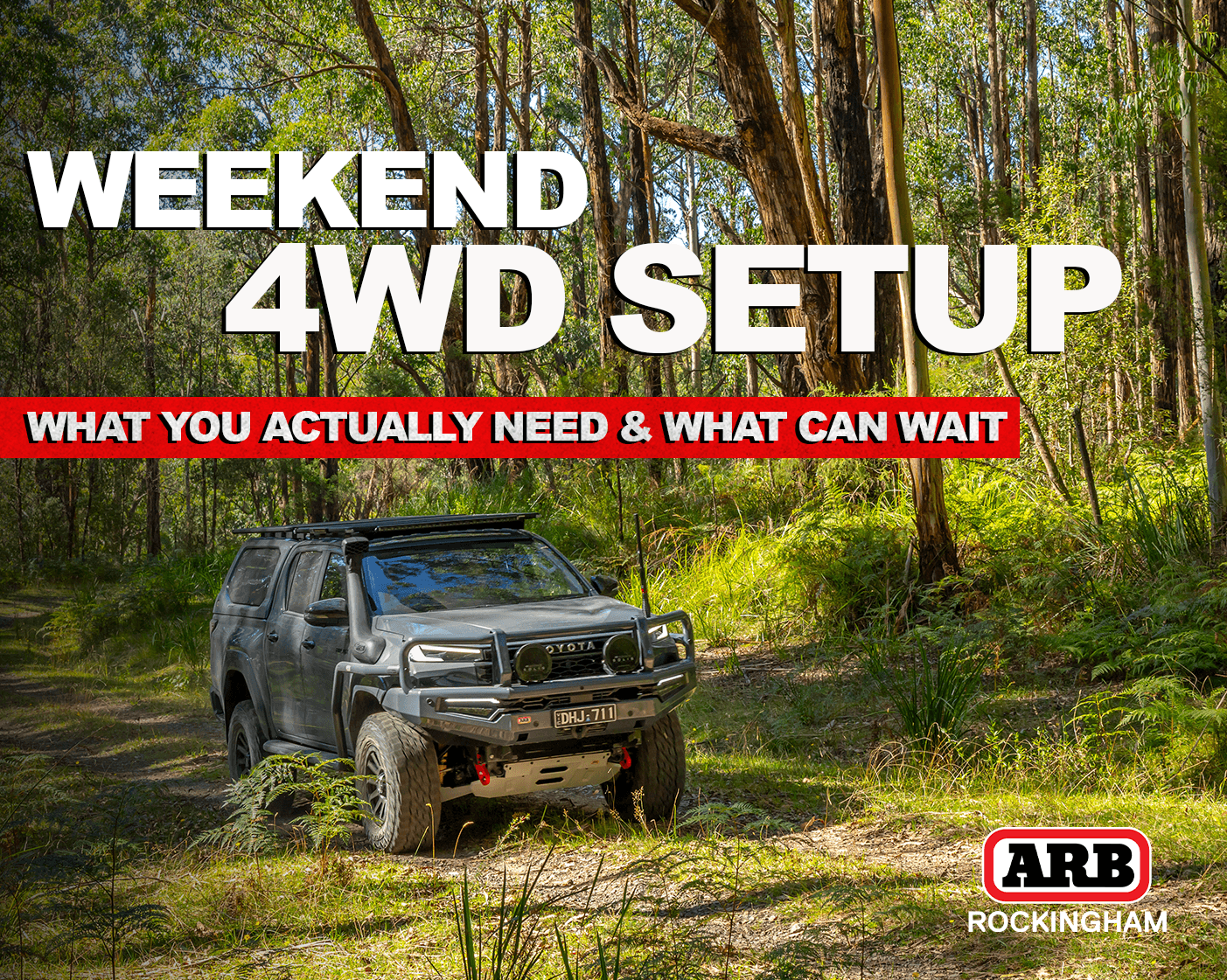
Not every 4WD needs to be built for weeks of remote travel.
If most of your trips are weekends down south, beach days, camping trips, fishing weekends or a few nights away, your setup can be a lot simpler.
The key is choosing accessories that make the trips you already do easier, safer and more practical, while leaving room to add more later if your travel plans change.
So, what should you actually consider for a weekend 4WD setup, and what can wait?
Start With Where Your Weekends Take You
Before adding anything to the vehicle, think about where you actually use it.
Someone spending weekends driving onto the beach has different needs to someone towing a caravan down south or heading out of Perth on regional roads after work on a Friday.
It is easy to look at fully built touring vehicles and assume you need the same setup, but for weekend use, that can quickly become more gear, weight and expense than you really need.
Start with the things that solve a problem you already have.
Think About the Driving You Do After Dark
A lot of weekend trips start after work on a Friday or finish with the drive home on Sunday afternoon or evening.
If that means spending more time on regional roads after dark, a good driving light setup may be worth considering.
The right setup is not simply about choosing the brightest light available. Distance, spread and where you normally drive all matter.
For someone who rarely leaves the metro area after dark, driving lights may not be the first upgrade we recommend. But if you regularly travel regional WA roads at night, where wildlife and kangaroos are more common, good visibility can make a big difference.
Stay Connected When You’re Out of Range
A UHF is a practical addition if your weekends involve travelling with other vehicles, heading onto tracks or spending time in areas where mobile reception can be unreliable.
It gives you a simple way to communicate between vehicles and can also be useful when sharing tracks and access roads with other drivers.
There are different UHF setups available depending on the vehicle and how you plan to use it, so it is worth choosing one that suits your particular setup rather than treating them all the same.
Keep Your Gear Organised and Protected
A weekend away usually means carrying more gear than you do day to day, so having somewhere practical to store it can make a big difference.
For wagons, a rear drawer system can help keep recovery gear, tools and camping equipment organised and easy to access.
For utes, it is also worth thinking about how your gear is protected from the weather. A hard lid or canopy can give you a more secure, covered space for camping gear, bags and other equipment.
This can be especially handy through winter, when rain and wet conditions can make an open tub much less practical.
You do not need to jump straight into a large touring setup either. The right storage option comes back to how much gear you carry, how often you head away and what you need to keep protected on the trip.
Onboard Air Is Worth Considering
If your weekends include beach driving or off road trips where tyre pressures need to be adjusted, having access to a compressor makes the process much easier.
There are portable and onboard options available, so this does not have to mean permanently fitting a compressor straight away.
For an occasional weekend traveller, a portable compressor may be all that is needed.
For someone using it more often, an onboard compressor can be a convenient upgrade that is always there when required.
Protection and Recovery Should Match the Trip
Bull bars, winches and recovery equipment all have their place, but what you need comes back to where the vehicle is going.
If you spend a lot of time on regional roads, travel through areas where kangaroos are common, or head further off road, front end protection may become a higher priority.
The same applies to recovery equipment.
There is no point fitting accessories simply because they appear on someone else’s build. Think about the situations you are realistically likely to encounter and build from there.
What Can Wait?
This is where a weekend setup can stay simple.
If you are mostly heading away for one or two nights, you may not immediately need a large canopy, complex electrical system, permanent water storage, multiple fridges or a complete off grid camping setup.
Those upgrades become much more valuable when the way you travel actually calls for them.
There is also nothing wrong with building a 4WD in stages.
Get the basics right first, use the vehicle, work out what you are missing and then add to it.
You might find that after a few trips, your biggest frustration is storage. Or it could be lighting, refrigeration, power or simply having somewhere convenient to keep recovery gear.
That experience gives you a much better idea of where to spend money next.
A Weekend Setup Can Still Be a Capable Setup
Simple does not mean underprepared.
In fact, our Ford Ranger Super Duty Weekender Package follows the same general idea. It focuses on a practical foundation with front end protection, driving lights, UHF communications and a MITS Alloy tray, rather than jumping straight into a complete canopy and off grid touring fitout.
From there, the vehicle can always be expanded as its use changes.
While that package is designed specifically for the Super Duty, the same thinking can be applied to almost any 4WD.
Build for the Trips You Actually Do
The best weekend 4WD setup is not necessarily the one with the longest accessory list.
It is the one that makes your weekends easier without adding things you do not need.
Start with how you use the vehicle now, focus on the upgrades that will make the biggest difference, and leave yourself room to grow into a bigger setup later.
If you are not sure where to start, get in touch with the team at ARB Rockingham or book an appointment online. We can talk through how you use your 4WD and help you work out which upgrades make sense for your setup.