A lot of people start the driving light conversation with one question:
“What are the brightest lights you have?”
It makes sense. If you are travelling on rural WA roads, especially at night, you want as much visibility as possible.
But brightness is only part of the story.
The best driving light setup is not always the biggest light or the most expensive option. It is the setup that suits where you drive, how often you drive after dark and what you actually need to see.
For some people, that means distance.
For others, it means spread.
For most 4WD owners, it is a balance of both.
Driving Lights WA Owners Should Choose Based On Use
Before choosing driving lights, it is worth thinking about where the vehicle spends most of its time.
A vehicle used mainly around Perth does not need the same lighting setup as one travelling regularly through rural WA, heading north, towing a caravan or covering long stretches of road after dark.
That is why we do not believe there is one perfect setup for everyone.
A good lighting setup should make night driving easier, safer and less tiring. It should help you see further ahead while also giving enough spread to pick up movement on the sides of the road.
Bigger Is Not Always Better
It is easy to assume bigger lights automatically mean better visibility.
Sometimes they do.
Sometimes they do not.
The issue is not just how much light a driving light produces. It is where that light goes.
A light with plenty of distance but not enough spread may help you see further down the road, but it might not give you the side visibility you want when travelling through areas where wildlife can move quickly.
A light with too much spread and not enough distance may feel bright close to the vehicle, but not give you enough time to react at higher speeds.
The right setup needs to suit the way the vehicle is driven.
Distance And Spread Both Matter
For rural WA roads, most people are looking for a setup that offers a good mix of distance and spread.
Distance helps you see further ahead.
Spread helps light up the edges of the road.
Both matter.
If you are doing long drives between towns, towing at night or regularly travelling outside built up areas, having that balance can make a noticeable difference.
It is not about turning night into day.
It is about giving the driver more time to see what is ahead and react properly.
Where The Lights Are Mounted Matters
The lights themselves are only part of the setup.
Where they are mounted also makes a difference.
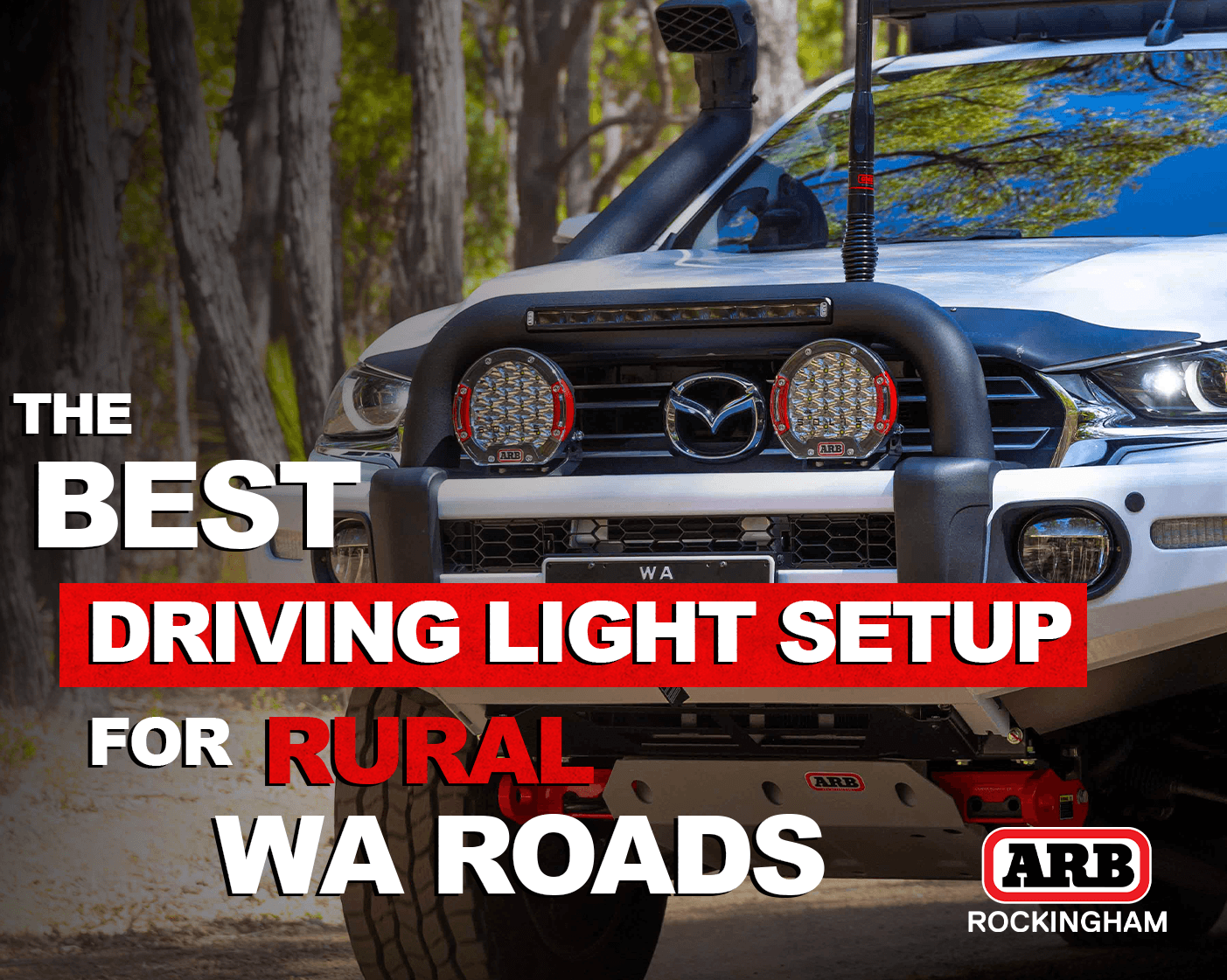
For many 4WDs, a bull bar provides the best place to mount driving lights. It keeps them secure, positions them well and allows the lighting setup to become part of the overall front end of the vehicle.
This is another reason it is worth thinking ahead.
If you are already planning a bull bar, it makes sense to talk about driving lights at the same time. Even if you are not ready to fit everything at once, knowing the long term plan can help make sure the setup works properly later.
Do You Need Driving Lights Or A Light Bar?
This is another common question.
Driving lights and light bars can both be useful, but they do different things.
Driving lights are often chosen when distance and road visibility are the priority.
Light bars can be helpful when wider spread is wanted, especially for slower driving or lighting up a broader area close to the vehicle.
Some setups use one or the other.
Some use both.
The right answer depends on how the vehicle is used.
If most of your driving is on rural roads at higher speeds, driving lights often make sense. If you spend more time on slower tracks, campsites or areas where side visibility matters more, a light bar may also be worth considering.
Start With What You Want To Achieve
When people come in asking about driving lights, one of the first questions we ask is simple:
“What do you want your lights to achieve?”
Some drivers want maximum distance for long stretches of rural highway.
Others want more spread to help spot wildlife near the edge of the road.
Some are looking for a practical setup that improves visibility without going overboard.
The answer helps determine which products are actually suitable for the vehicle.
One of the biggest mistakes people make is assuming the most expensive option is automatically the best option. In reality, the best setup is usually the one that achieves the desired result without unnecessary complexity.
Sometimes keeping things simple leads to the best outcome.
When Driving Lights Make The Most Sense
Not every driver needs upgraded lighting straight away.
If your vehicle rarely leaves the metro area or you do not often drive at night, driving lights may not be the first upgrade you need.
But if you are regularly travelling through rural WA, towing after dark, heading away on camping trips or planning remote travel, quality driving lights can quickly become one of the most appreciated upgrades on the vehicle.
They are one of those accessories people often value most after they have used them properly.
Our Advice Before Choosing A Setup
There are plenty of driving lights on the market, and it’s easy to get caught up comparing specifications, brightness figures and product features.
In our experience, the better question is:
Will this setup suit the way the vehicle is used?
If the answer is yes, you’re probably heading in the right direction.
At ARB Rockingham, we believe the best lighting setups are the ones that provide confidence, improve visibility and make those long drives through regional WA a little easier.
Because at the end of the day, that’s what good driving lights are there to do.